Google
 G2

Feed management keeps your products visible on every channel
In ecommerce, feed management means organizing, optimizing and distributing your product data across the channels where you sell. Each channel, from Google Shopping and Amazon to Meta (Facebook and Instagram) and TikTok Shop, has its own rules for titles, categories, images and attributes. A good feed meets those rules and keeps prices and stock current.
Feed quality matters more than it used to. Google Merchant Center data feeds Shopping ads, free listings and the shopping results inside Google’s AI-powered search experiences, so a clean, complete feed helps you show up in all of them.
Managing feeds by hand in spreadsheets stops working once you have more than a few dozen products or more than one channel. A feed management platform automates the mapping, rules and updates. Here are nine platforms worth comparing, with a note on who each one fits best.
| 1. GoDataFeed | 2. DataFeedWatch | 3. ChannelAdvisor (Rithum) |
| 4. ShoppingFeeder | 5. Feedonomics | 6. Sales & Orders (Omnione) |
| 7. ShoppingCartElite | 8. CedCommerce | 9. Channable |
#1 GoDataFeed: a full-featured all-rounder |
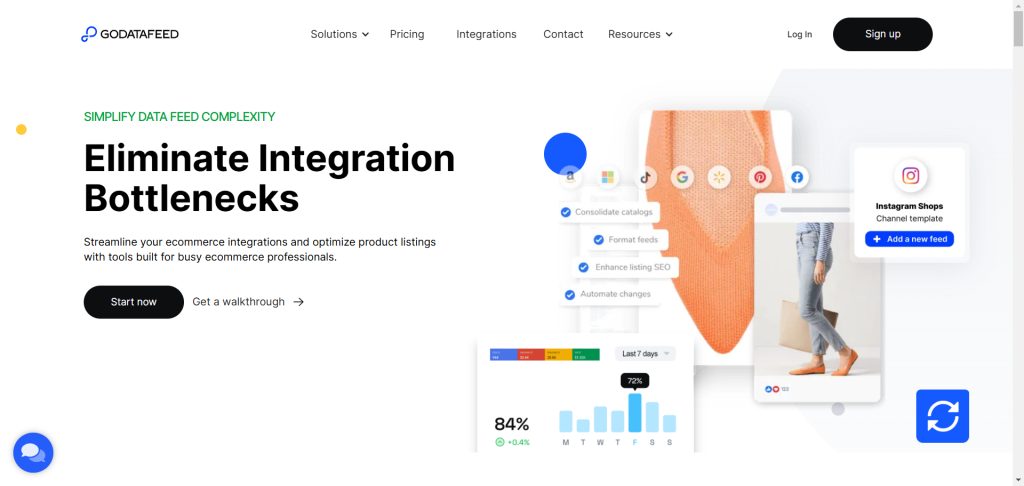
GoDataFeed is a long-running product feed platform that covers feed optimization, distribution and reporting in one place. It supports a wide range of channels, including Google, Amazon and Meta, and offers both a do-it-yourself plan and a managed service.
Key features:
- Automated feed optimization: Adjusts product data to meet each channel’s requirements.
- Customizable templates: Build feed templates around the specific rules of each channel.
- Performance reporting: See how products perform by channel so you can adjust bids and feed content.
- Error monitoring: Flags feed errors and disapprovals before they cost you visibility.
GoDataFeed is a strong first option for retailers that want one tool to handle optimization, distribution and reporting.
#2 DataFeedWatch: flexible rules for custom feeds |
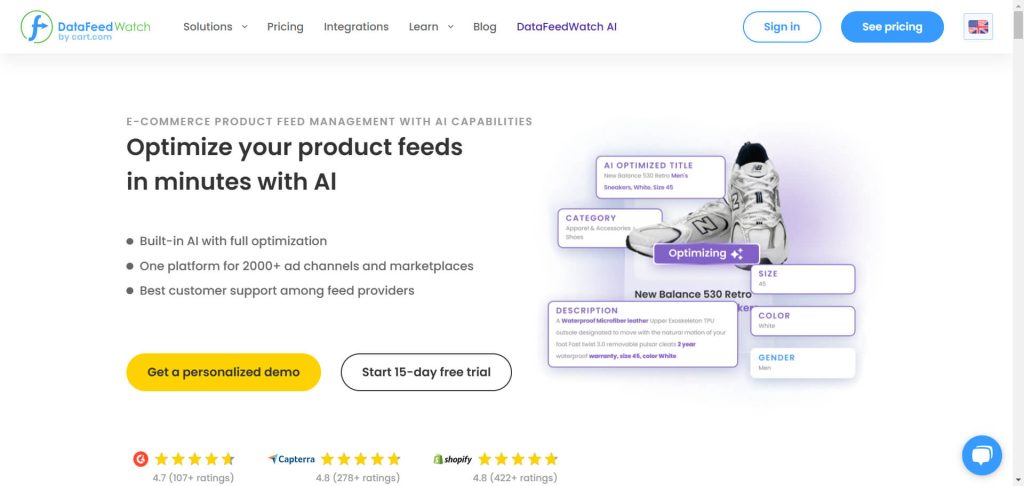
DataFeedWatch is known for its flexibility and ease of use. It lets you build and edit feeds for many shopping channels without writing code, and it works for businesses of different sizes.
Key features:
- Feed customization: Create custom feeds that meet each marketplace’s requirements.
- Multi-language support: Build feeds in multiple languages for international selling.
- Advanced filtering: Filter products by attribute to build targeted feeds.
DataFeedWatch suits teams that want detailed control over how product data is transformed for each channel.
#3 ChannelAdvisor (now Rithum): built for large multichannel sellers |

ChannelAdvisor merged with CommerceHub and now operates under the Rithum name. It is an e-commerce platform for brands and retailers that includes feed management alongside marketplace, inventory and order tools.
Key features:
- Unified dashboard: Manage feeds, inventory and orders in one place.
- Marketplace integration: Connects with major marketplaces such as Amazon, eBay and Walmart.
- Listing optimization: Tools to keep product listings complete and consistent across channels.
Rithum is most useful for larger operations that need feeds, inventory and order management in the same system.
#4 ShoppingFeeder: a simple option for smaller stores |
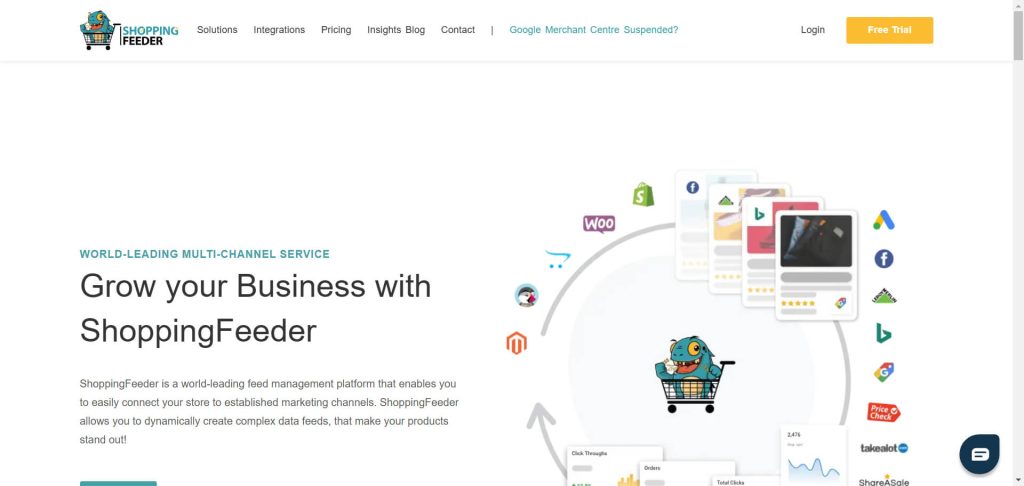
ShoppingFeeder is a straightforward feed tool that connects popular store platforms, such as Shopify and WooCommerce, to Google Shopping and other channels. It is aimed at small and mid-sized merchants.
Key features:
- Store platform connections: Pulls product data from common ecommerce platforms.
- Multiple channel support: Sends feeds to Google Shopping, Meta, Amazon and more.
- Simple interface: Easy to learn without a dedicated feed specialist.
ShoppingFeeder is a good fit when you want feeds running quickly without the complexity of an enterprise platform.
#5 Feedonomics: enterprise-scale feed control |
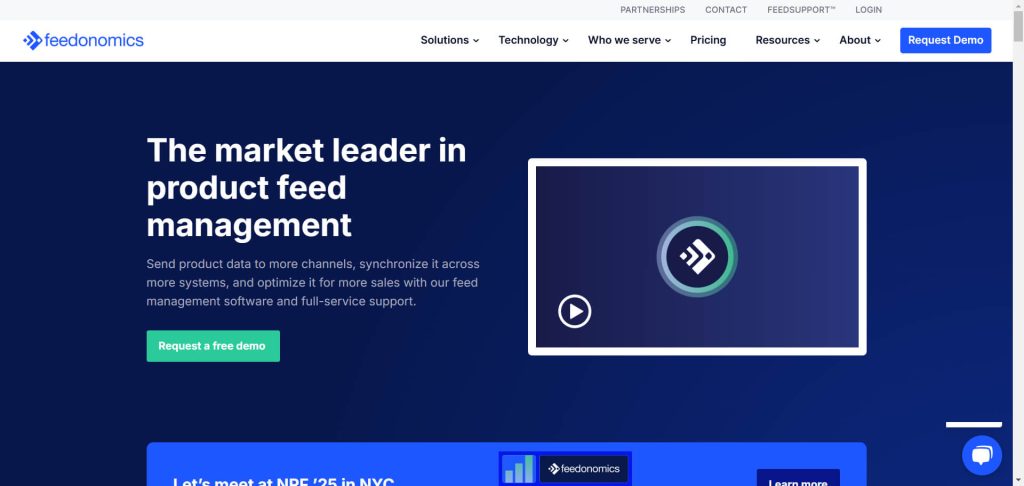
Feedonomics is a feed platform for large catalogs and complex ecommerce businesses. BigCommerce acquired it in 2022, and it continues to serve merchants on any ecommerce platform, with a strong emphasis on managed support.
Key features:
- Automated feed optimization: Adjusts product data for each sales channel.
- Custom rules engine: Control exactly how your data is processed and formatted.
- Analytics: Insight into feed performance to help you fine-tune listings.
Feedonomics is best for large catalogs and enterprise teams that need a scalable solution and hands-on support.
#6 Sales & Orders (now Omnione): feed optimization with managed support |

Sales & Orders now operates as Omnione, a cloud-based feed management service for platforms such as Google, Shopify and WooCommerce. It combines automation with expert support for product data optimization.
Key features:
- Multi-channel feeds: Manage feeds for Google Shopping, Meta, Amazon and other marketplaces.
- Custom feed rules: Create rules to clean up and optimize product data.
- Expert support: Hands-on help with feed optimization.
Omnione fits merchants that want automation plus human help improving their product data.
#7 ShoppingCartElite: feeds from your cart platform |

ShoppingCartElite is an e-commerce platform with feed tools built in, so you can send product data to online channels without adding a separate service.
Key features:
- Centralized management: Manage product data from a single interface.
- Feed templates: Create feeds specific to each channel.
- Automation: Automates feed generation and distribution.
Consider it if you want your store platform and feed tools in one system. Confirm current features and support with the vendor before committing.
#8 CedCommerce: marketplace expansion across many channels |
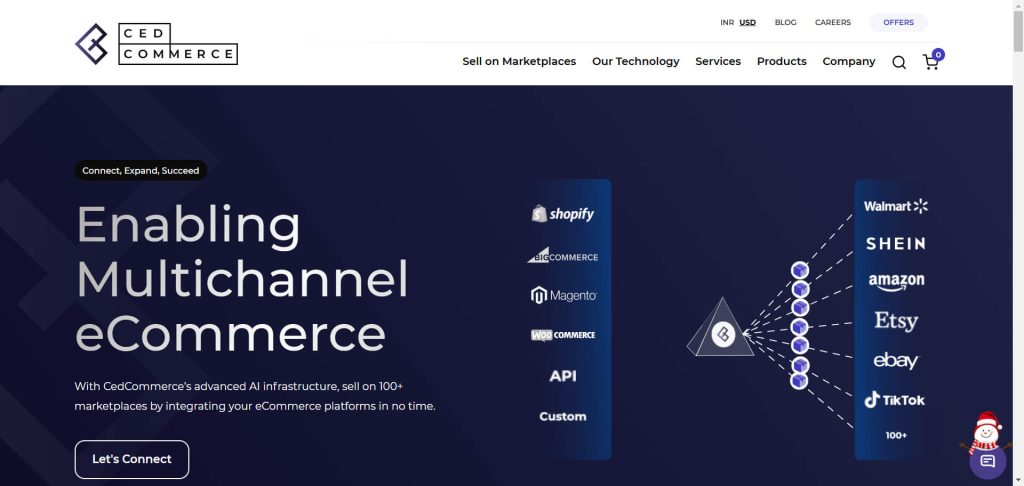
CedCommerce specializes in multichannel selling and helps merchants list and sync products on marketplaces such as Amazon, Walmart, eBay and TikTok Shop.
Key features:
- Marketplace support: Integrates with major global marketplaces.
- Easy interface: Manage listings and feeds without technical work.
- Product sync: Keeps inventory and product data aligned across connected channels.
CedCommerce is a good choice when your main goal is expanding onto marketplaces rather than fine-tuning Shopping ads.
#9 Channable: rule-based feeds popular with agencies |
Channable is a feed management platform that lets you build rules to clean up, filter and reshape product data, then send it to shopping, marketplace and advertising channels. Marketing teams and agencies often use it to manage feeds for several stores.
Key features:
- Rule-based editing: Transform product data with rules instead of manual edits.
- Multiple destinations: Send feeds to shopping engines, marketplaces and ad platforms.
- Team-friendly workflow: Useful when several people or clients share the same account.
Channable works well for teams that want flexible rules and a tool that scales across multiple catalogs.

Choose the platform that matches your catalog and your channels
Start with the channels you actually sell on, the size of your catalog and how much hands-on help you need. Smaller stores usually do well with a simple tool such as ShoppingFeeder. Large catalogs and enterprise teams tend to need Feedonomics or Rithum. If you want strong rules and flexibility, look at GoDataFeed, DataFeedWatch or Channable.
Whichever you choose, check the vendor’s current channel list and support options, and test the platform with a sample of your catalog before you commit.
Need help with product feeds, Shopping campaigns or ecommerce SEO? SmartSites manages feeds, paid search, SEO, web design and email/SMS marketing for ecommerce brands. Get a Free Proposal or call 201-870-6000 to talk it through.
“We are attaining lower cost per purchase values than ever before!”