Klaviyo for B2C: Why It’s the Best CRM for Ecommerce Brands in 2026

Ashley Ismailovski
Director of Email Marketing
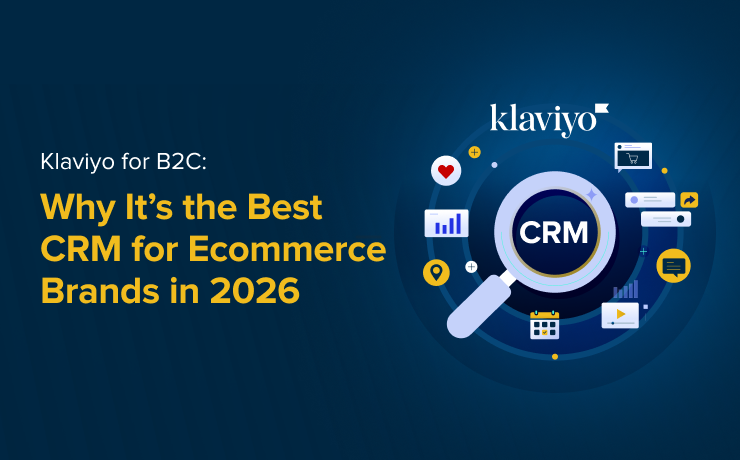
Choosing the right CRM in 2026 isn’t about selecting the platform with the longest feature list. It’s about choosing the one that aligns with how your business actually generates revenue. In Klaviyo’s recent article, “The Best CRM Software for 2026,” SmartSites contributed insights on how ecommerce brands should evaluate CRM platforms. The conclusion is clear: when it comes to ecommerce, Klaviyo for B2C stands out as the strongest choice.
Ecommerce Brands Need a CRM Built Around Behavior
Many CRM platforms were originally built for B2B organizations with complex sales pipelines, long deal cycles, and multiple sales representatives. Ecommerce brands operate very differently. B2C customer journeys are typically shorter, more behavioral, and highly transactional. That requires a CRM that can respond instantly to browsing activity, purchase history, engagement signals, and real-time customer data.
As shared in the Klaviyo feature:
“B2B businesses may have longer, more complex relationships with their clients, while ecommerce brands see shorter or more transactional cycles. Each use case has very different needs when it comes to a CRM.”
If a CRM isn’t built around customer behavior, ecommerce brands often find themselves forcing marketing strategies into systems that don’t fit.
Why SmartSites Recommends Klaviyo for B2C
Klaviyo for B2C is purpose-built for ecommerce and direct-to-consumer brands. Instead of relying on separate tools for email, SMS, segmentation, and data management, Klaviyo unifies everything into one centralized ecosystem. Its built-in customer data platform keeps profiles synced in real time, enabling brands to turn behavioral signals into timely, personalized experiences.
With Klaviyo for B2C, brands can:
- Trigger flows based on browsing and purchase activity
- Build dynamic audience segments without heavy developer support
- Personalize messaging across channels
- Launch lifecycle campaigns that focus on retention
For ecommerce brands that prioritize lifetime value and repeat purchases, this behavioral foundation makes a measurable difference.
Driving Retention and Revenue at Scale
At SmartSites, lifecycle marketing is centered around retention, personalization, and scalable automation. Klaviyo for B2C enables sophisticated strategies without unnecessary complexity.
Common revenue-driving initiatives powered by Klaviyo include:
- Abandoned cart recovery programs
- Post-purchase nurturing sequences
- Cross-sell and upsell automation
- Win-back campaigns
- Loyalty and engagement flows
By consolidating customer data and marketing execution into one platform, ecommerce brands reduce friction while increasing precision.
The Right CRM Aligns with How Customers Buy
The biggest mistake brands make when choosing a CRM is selecting one based on feature volume instead of operational fit.
Klaviyo for B2C continues to stand out in 2026 because it matches how ecommerce customers actually shop and engage. It supports real-time data activation, lifecycle automation, and personalized retention strategies—without forcing brands into complex sales frameworks designed for B2B.
For ecommerce companies evaluating CRM platforms this year, the question isn’t which platform has the most features. It’s which one supports how your customers behave. For B2C brands focused on sustainable growth, Klaviyo for B2C remains the platform SmartSites recommends.
 Free
Consultation
Free
Consultation Free
Google Ads Audit
Free
Google Ads Audit